Robert Herrick
1591 - 1674
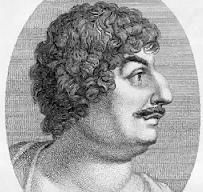
Robert Herrick was born in London in 1591. The son of a goldsmith, he was apprenticed to his uncle, also a goldsmith but went to Trinity Hall, Cambridge at the age of 22. He graduated in 1620 and took holy orders and commenced duties in a parish in Devon. As a Royalist he was forced to give up the parish in 1647. He was restored to it in 1662 and died in 1674. Herrick wrote on a number of themes. Often, and most famously, on the attributes of young women but also on rural life, religious themes and in his later life on his approaching death. Many of his poems also concern themselves with 'making much of time' or carpe diem, sieze the day as made famous in the film Dead Poet's Society.
Here you will find a large selection of his work, including many of the poems to Julia and, importantly, his finest work: Corinna's Going a Maying.
To
the Virgins, to Make Much of Time
Gather ye rosebuds while ye may,
Old time is still a-flying;
And the same flower
that smiles today
Tomorrow will be dying.
The glorious lamp
of heaven the sun,
The higher he's a-getting,
The sooner will
his race be run,
And nearer he's to setting.
That age is best
which is the first,
When youth and blood are warmer;
But being spent,
the worse, and worst
Times still succeed the former.
Then be not coy,
but use your time,
And, while ye may, go marry;
For, having lost
but once your prime,
You may forever tarry.
Delight
in Disorder
A sweet disorder in the dress
Kindles in clothes
a wantonness.
A lawn about the
shoulders thrown
Into a fair distraction;
An erring lace
which here and there
Enthralls the crimson
stomacher;
A cuff neglectful,
and thereby
Ribbons to flow
confusedly;
A winning wave,
deserving note,
In the tempestuous
petticoat;
A careless shoestring,
in whose tie
I see a wild civility;
Do more bewitch
me than when art
Is too precise
in every part.
A
Meditation for his Mistress
You
are a tulip seen today,
But (Dearest) of so short a
stay;
That where you grew, scarce
man can say.
You are a lovely July-flower,
Yet one rude wind, or ruffling
shower,
Will force you hence, (and
in an hour.)
You are a sparkling Rose i'th'bud,
Yet lost, ere that chaste flesh
and blood
Can show where you or grew,
or stood.
You are a full-spread fair-set
Vine,
And can with Tendrils love
entwine,
Yet dried, ere you distill
your Wine.
You are like Balm enclosed
(well)
In Amber, or some Crystal shell,
Yet lost, ere you transfuse
your smell.
You are a dainty Violet,
Yet withered, ere you can be
set
Within the Virgin's Coronet.
You are the Queen all flowers
among,
But die you must (fair Maid)
ere long,
As He, the maker of this song.
Be My Mistress Short or Tall
Be
my mistress short or tall
And distorted therewithall
Be she likewise one of those
That an acre hath of nose
Be her teeth ill hung or set
And her grinders black as jet
Be her cheeks so shallow too
As to show her tongue wag through
Hath she thin hair, hath she
none
She's to me a paragon.
To Anthea Who May Command Him Anything
Bid
me to live, and I will live,
Thy Protestant to be:
Or bid me love, and I will
give
A loving heart to thee.
A heart as soft, a heart as
kind,
A heart as sound and free
As in the whole world thou
canst find,
That heart I'll give to thee.
Bid that heart stay, and it
will stay,
To honour thy decree:
Or bid it languish quite away,
And't shall do so for thee.
Bid me to weep, and I will
weep
While I have eyes to see:
And having none, yet I will
keep
A heart to weep for thee.
Bid me despair, and I'll despair,
Under that cypress tree:
Or bid me die, and I will dare
E'en Death, to die for thee.
Thou art my life, my love,
my heart,
The very eyes of me,
And hast command of every part,
To live and die for thee.
To
Phillis, to Love and Live With Him
Live,
live with me, and thou shalt see
The pleasures I'll prepare for thee:
What sweets the country can afford
Shall bless thy bed, and bless thy board.
The soft sweet moss shall be thy bed,
With crawling woodbine over-spread:
By which the silver-shedding streams
Shall gently melt thee into dreams.
Thy clothing next, shall be a gown
Made of the fleeces' purest down.
The tongues of kids shall be thy meat;
Their milk thy drink; and thou shalt eat
The paste of filberts for thy bread
With cream of cowslips buttered:
Thy feasting-table shall be hills
With daisies spread, and daffadils;
Where thou shalt sit, and Red-breast by,
For meat, shall give thee melody.
I'll give thee chains and carcanets
Of primroses and violets.
A bag and bottle thou shalt have,
That richly wrought, and this as brave;
So that as either shall express
The wearer's no mean shepherdess.
At shearing-times, and yearly wakes,
When Themilis his pastime makes,
There thou shalt be; and be the wit,
Nay more, the feast, and grace of it.
On holydays, when virgins meet
To dance the heys with nimble feet,
Thou shalt come forth, and then appear
The Queen of Roses for that year.
And having danced ('bove all the best)
Carry the garland from the rest,
In wicker-baskets maids shall bring
To thee, my dearest shepherdling,
The blushing apple, bashful pear,
And shame-faced plum, all simp'ring there.
Walk in the groves, and thou shalt find
The name of Phillis in the rind
Of every straight and smooth-skin tree;
Where kissing that, I'll twice kiss thee.
To thee a sheep-hook I will send,
Be-prank'd with ribbands, to this end,
This, this alluring hook might be
Less for to catch a sheep, than me.
Thou shalt have possets, wassails fine,
Not made of ale, but spiced wine;
To make thy maids and self free mirth,
All sitting near the glitt'ring hearth.
Thou shalt have ribbands, roses, rings,
Gloves, garters, stockings, shoes, and strings
Of winning colours, that shall move
Others to lust, but me to love.
--These, nay, and more, thine own shall be,
If thou wilt love, and live with me.
Upon her wings presents the god unshorn.
See how Aurora throws her fair
Fresh-quilted colours through the air:
Get up, sweet-slug-a-bed, and see
The dew bespangling herb and tree.
Each flower has wept, and bow'd toward the east,
Above an hour since; yet you not drest,
Nay! not so much as out of bed?
When all the birds have matins said,
And sung their thankful hymns: 'tis sin,
Nay, profanation, to keep in,--
Whenas a thousand virgins on this day,
Spring, sooner than the lark, to fetch in May.
Rise; and put on your foliage, and be seen
To come forth, like the Spring-time, fresh and green,
And sweet as Flora. Take no care
For jewels for your gown, or hair:
Fear not; the leaves will strew
Gems in abundance upon you:
Besides, the childhood of the day has kept,
Against you come, some orient pearls unwept:
Come, and receive them while the light
Hangs on the dew-locks of the night:
And Titan on the eastern hill
Retires himself, or else stands still
Till you come forth. Wash, dress, be brief in praying:
Few beads are best, when once we go a Maying.
Come, my Corinna, come; and coming, mark
How each field turns a street; each street a park
Made green, and trimm'd with trees: see how
Devotion gives each house a bough
Or branch: each porch, each door, ere this,
An ark, a tabernacle is
Made up of white-thorn neatly interwove;
As if here were those cooler shades of love.
Can such delights be in the street,
And open fields, and we not see't?
Come, we'll abroad: and let's obey
The proclamation made for May:
And sin no more, as we have done, by staying;
But, my Corinna, come, let's go a Maying.
There's not a budding boy, or girl, this day,
But is got up, and gone to bring in May.
A deal of youth, ere this, is come
Back, and with white-thorn laden home.
Some have dispatch'd their cakes and cream,
Before that we have left to dream:
And some have wept, and woo'd, and plighted troth,
And chose their priest, ere we can cast off sloth:
Many a green-gown has been given;
Many a kiss, both odd and even:
Many a glance, too, has been sent
From out the eye, love's firmament:
Many a jest told of the keys betraying
This night, and locks pick'd:--yet we're not a Maying.
--Come, let us go, while we are in our prime;
And take the harmless folly of the time!
We shall grow old apace, and die
Before we know our liberty.
Our life is short; and our days run
As fast away as does the sun:--
And as a vapour, or a drop of rain
Once lost, can ne'er be found again:
So when or you or I are made
A fable, song, or fleeting shade;
All love, all liking, all delight
Lies drown'd with us in endless night.
--Then while time serves, and we are but decaying,
Come, my Corinna! come, let's go a Maying. Thou art to all lost love the best,
The only true plant found,
Wherewith young men and maids distrest
And left of love, are crown'd.
When once the lover's rose is dead
Or laid aside forlorn,
Then willow-garlands, 'bout the head,
Bedew'd with tears, are worn.
When with neglect, the lover's bane,
Poor maids rewarded be,
For their love lost their only gain
Is but a wreath from thee.
And underneath thy cooling shade,
When weary of the light,
The love-spent youth, and love-sick maid,
Come to weep out the night.
Love,
like a gipsy, lately came,
And did me much importune
To see my hand, that by the same
He might foretell my fortune.
He saw my palm; and then, said he,
I tell thee, by this score here,
That thou, within few months, shalt be
The youthful Prince D'Amour here.
I smiled, and bade him once more prove,
And by some cross-line show it,
That I could ne'er be Prince of Love,
Though here the Princely Poet.
The
Apparition of His Mistress Calling Him to Elysium
Desunt Nonnulla--
Let our souls fly to th' shades, wherever springs
Sit smiling in the meads; where balm and oil,
Roses and cassia, crown the untill'd soil;
Where no disease reigns, or infection comes
To blast the air, but amber-gris and gums.
This, that, and ev'ry thicket doth transpire
More sweet than storax from the hallow'd fire;
Where ev'ry tree a wealthy issue bears
Of fragrant apples, blushing plums, or pears;
And all the shrubs, with sparkling spangles, shew
Like morning sun-shine, tinselling the dew.
Here in green meadows sits eternal May,
Purfling the margents, while perpetual day
So double-gilds the air, as that no night
Can ever rust th' enamel of the light:
Here naked younglings, handsome striplings, run
Their goals for virgins' kisses; which when done,
Then unto dancing forth the learned round
Commix'd they meet, with endless roses crown'd.
And here we'll sit on primrose-banks, and see
Love's chorus led by Cupid; and we'll he
Two loving followers too unto the grove,
Where poets sing the stories of our love.
There thou shalt hear divine Musaeus sing
Of Hero and Leander; then I'll bring
Thee to the stand, where honour'd Homer reads
His Odyssees and his high Iliads;
About whose throne the crowd of poets throng
To hear the incantation of his tongue:
To Linus, then to Pindar; and that done,
I'll bring thee, Herrick, to Anacreon,
Quaffing his full-crown'd bowls of burning wine,
And in his raptures speaking lines of thine,
Like to his subject; and as his frantic
Looks shew him truly Bacchanalian like,
Besmear'd with grapes,--welcome he shall thee thither,
Where both may rage, both drink and dance together.
Then stately Virgil, witty Ovid, by
Whom fair Corinna sits, and doth comply
With ivory wrists his laureat head, and steeps
His eye in dew of kisses while he sleeps.
Then soft Catullus, sharp-fang'd Martial,
And towering Lucan, Horace, Juvenal,
And snaky Persius; these, and those whom rage,
Dropt for the jars of heaven, fill'd, t' engage
All times unto their frenzies; thou shalt there
Behold them in a spacious theatre:
Among which glories, crown'd with sacred bays
And flatt'ring ivy, two recite their plays,
Beaumont and Fletcher, swans, to whom all ears
Listen, while they, like sirens in their spheres,
Sing their Evadne; and still more for thee
There yet remains to know than thou canst see
By glimm'ring of a fancy; Do but come,
And there I'll shew thee that capacious room
In which thy father, Jonson, now is placed
As in a globe of radiant fire, and graced
To be in that orb crown'd, that doth include
Those prophets of the former magnitude,
And he one chief. But hark! I hear the cock,
The bell-man of the night, proclaim the clock
Of late struck One; and now I see the prime
Of day break from the pregnant east:--'tis time
I vanish:--more I had to say,
But night determines here; Away!
Whenas in silks my Julia goes,
Till, then, methinks, how sweetly flows
That liquefaction of her clothes!
Next, when I cast mine eyes, and see
That brave vibration each way free;
O how that glittering taketh me!
The Bracelet - To Julia
Why I tie about thy wrist,
Julia, this my silken twist?
For what other reason is't,
But to shew thee how in part
Thou my pretty captive art?
But thy bond-slave is my heart;
'Tis but silk that bindeth thee,
Knap the thread and thou art free;
But 'tis otherwise with me;
I am bound, and fast bound so,
That from thee I cannot go;
If I could, I would not so.
Upon Julia's Ribbon
As shews the air when with a rain-bow graced,
So smiles that ribbon 'bout my Julia's waist;
Or like----Nay, 'tis that Zonulet of love,
Wherein all pleasures of the world are wove.
Upon Julia's Breasts
Display thy breasts, my Julia, there let meBehold that circummortal purity:
Between whose glories, there my lips I'll lay,
Ravished, in that fair Via Lactea. How rich and pleasing thou, my Julia, art,
In each thy dainty and peculiar part!
First, for thy Queen-ship on thy head is set
Of flowers a sweet commingled coronet;
About thy neck a carkanet is bound,
Made of the Ruby, Pearl, and Diamond;
A golden ring, that shines upon thy thumb;
About thy wrist the rich Dardanium;
Between thy breasts, than down of swans more white,
There plays the Sapphire with the Chrysolite.
No part besides must of thyself be known,
But by the Topaz, Opal, Calcedon.
Art Above Nature: To Julia
When I behold a forest spread
With silken trees upon thy head;
And when I see that other dress
Of flowers set in comeliness;
When I behold another grace
In the ascent of curious lace,
Which, like a pinnacle, doth shew
The top, and the top-gallant too;
Then, when I see thy tresses bound
Into an oval, square, or round,
And knit in knots far more than I.
Can tell by tongue, or True-love tie;
Next, when those lawny films I see
Play with a wild civility;
And all those airy silks to flow,
Alluring me, and tempting so--
I must confess, mine eye and heart
Dotes less on nature than on art.
Her Bed
See'st thou that cloud as silver clear,
Plump, soft, and swelling every where?
'Tis Julia's bed, and she sleeps there.
The Rock of Rubies and the Quarry of Pearls
Some ask'd me where the Rubies grew:
And nothing I did say,
But with my finger pointed to
The lips of Julia.
Some ask'd how Pearls did grow, and where:
Then spoke I to my girl,
To part her lips, and shew me there
The quarrelets of Pearl.
The Parliament of Roses: To Julia
I dreamt the Roses one time went
To meet and sit in Parliament;
The place for these, and for the rest
Of flowers, was thy spotless breast.
Over the which a state was drawn
Of tiffany, or cob-web lawn;
Then in that Parly all those powers
Voted the Rose the Queen of flowers;
But so, as that herself should be
The Maid of Honour unto thee.
Upon Julia's Recovery
Droop, droop no more, or hang the head,
Ye roses almost withered;
Now strength, and newer purple get,
Each here declining violet.
O primroses! let this day be
A resurrection unto ye;
And to all flowers allied in blood,
Or sworn to that sweet sisterhood.
For health on Julia's cheek hath shed
Claret and cream commingled;
And those, her lips, do now appear
As beams of coral, but more clear.
Upon Julia's Hair Filled With Dew
Dew sate on Julia's hair,
And spangled too,
Like leaves that laden are
With trembling dew;
Or glitter'd to my sight,
As when the beams
Have their reflected light
Danced by the streams.
Cherry Ripe
Cherry-ripe, ripe, ripe, I cry,
Full and fair ones; come, and buy:
If so be you ask me where
They do grow? I answer, there
Where my Julia's lips do smile;--
There's the land, or cherry-isle;
Whose plantations fully show
All the year where cherries grow.
The Captive Bee; Or, The Little Filcher
As Julia once a-slumb'ring lay,
It chanced a bee did fly that way,
After a dew, or dew-like shower,
To tipple freely in a flower;
For some rich flower, he took the lip
Of Julia, and began to sip;
But when he felt he suck'd from thence
Honey, and in the quintessence,
He drank so much he scarce could stir;
So Julia took the pilferer.
And thus surprised, as filchers use,
He thus began himself t'excuse:
'Sweet lady-flower, I never brought
Hither the least one thieving thought;
But taking those rare lips of yours
For some fresh, fragrant, luscious flowers,
I thought I might there take a taste,
Where so much sirup ran at waste.
Besides, know this, I never sting
The flower that gives me nourishing;
But with a kiss, or thanks, do pay
For honey that I bear away.'
--This said, he laid his little scrip
Of honey 'fore her ladyship,
And told her, as some tears did fall,
That, that he took, and that was all.
At which she smiled, and bade him go
And take his bag; but thus much know,
When next he came a-pilfering so,
He should from her full lips derive
Honey enough to fill his hive.
Upon Roses
Under a lawn, than skies more clear,
Some ruffled Roses nestling were,
And snugging there, they seem'd to lie
As in a flowery nunnery;
They blush'd, and look'd more fresh than flowers
Quickened of late by pearly showers;
And all, because they were possest
But of the heat of Julia's breast,
Which, as a warm and moisten'd spring,
Gave them their ever-flourishing.
How His Soul Came Ensnared
My soul would one day go and seek
For roses, and in Julia's cheek
A richess of those sweets she found,
As in another Rosamond;
But gathering roses as she was,
Not knowing what would come to pass,
it chanced a ringlet of her hair
Caught my poor soul, as in a snare;
Which ever since has been in thrall;
--Yet freedom she enjoys withal.
Upon Julia's Voice
When I thy singing next shall hear,
I'll wish I might turn all to ear,
To drink-in notes and numbers, such
As blessed souls can't hear too much
Then melted down, there let me lie
Entranced, and lost confusedly;
And by thy music strucken mute,
Die, and be turn'd into a Lute.
The Night Piece: To Julia
Her eyes the glow-worm lend thee,
The shooting stars attend thee;
And the elves also,
Whose little eyes glow
Like the sparks of fire, befriend thee.
No Will-o'th'-Wisp mis-light thee,
Nor snake or slow-worm bite thee;
But on, on thy way,
Not making a stay,
Since ghost there's none to affright thee.
Let not the dark thee cumber;
What though the moon does slumber?
The stars of the night
Will lend thee their light,
Like tapers clear, without number.
Then, Julia, let me woo thee,
Thus, thus to come unto me;
And when I shall meet
Thy silvery feet,
My soul I'll pour into thee.
His Covenant Or Protestation: To Julia
Why dost thou wound and break my heart,
As if we should for ever part?
Hast thou not heard an oath from me,
After a day, or two, or three,
I would come back and live with thee?
Take, if thou dost distrust that vow,
This second protestation now:--
Upon thy cheek that spangled tear,
Which sits as dew of roses there,
That tear shall scarce be dried before
I'll kiss the threshold of thy door;
Then weep not, Sweet, but thus much know,--
I'm half returned before I go.
His Sailing From Julia
When that day comes, whose evening says I'm gone
Unto that watery desolation;
Devoutly to thy Closet-gods then pray,
That my wing'd ship may meet no Remora.
Those deities which circum-walk the seas,
And look upon our dreadful passages,
Will from all dangers re-deliver me,
For one drink-offering poured out by thee,
Mercy and Truth live with thee! and forbear,
In my short absence, to unsluice a tear;
But yet for love's-sake, let thy lips do this,--
Give my dead picture one engendering kiss;
Work that to life, and let me ever dwell
In thy remembrance, Julia. So farewell.
His Last Request to Julia
I have been wanton, and too bold, I fear,
To chafe o'er-much the virgin's cheek or ear;--
Beg for my pardon, Julia! he doth win
Grace with the gods who's sorry for his sin.
That done, my Julia, dearest Julia, come,
And go with me to chuse my burial room:
My fates are ended; when thy Herrick dies,
Clasp thou his book, then close thou up his eyes.
The Transfiguration
Immortal clothing I put on
So soon as, Julia, I am gone
To mine eternal mansion.
Thou, thou art here, to human sight
Clothed all with incorrupted light;
--But yet how more admir'dly bright
Wilt thou appear, when thou art set
In thy refulgent thronelet,
That shin'st thus in thy counterfeit!